
Museum News

Current Exhibition

Fashioning the New Woman: 1890-1925
October 5, 2012 - August 31, 2013


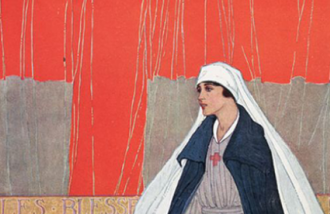
From the last years of the bustle to the flapper era, unprecedented changes in women’s fashion took place, which reflected the underlying seismic shifts in women’s roles in American society. The DAR Museum exhibition, “Fashioning the New Woman: 1890-1925,” on display October 5, 2012 through August 31, 2013, traces the evolution of women’s fashion and how it reflected the changing societal roles and activities of women during the Progressive Era.

The exhibition examines the emergence of the “New Woman” as she was dubbed in popular culture. This archetypal woman represented the growing numbers of women venturing out of the domestic arena where society had told them they belonged and pursuing higher education, working in office jobs, playing active sports and working for social reform.

Click here to view the "Fashioning the New Woman: 1890-1925" online exhibition.

Active lives required more practical clothes than the many-layered, heavily draped outfits of the late Victorian lady. Simpler, more streamlined clothing evolved during the turn of the 20th century. An array of clothing and objects from the DAR Museum collection are featured showing the changing fashions of the period.

A fashion timeline of costumed manikins shows the progression of women’s dresses, most noticeably characterized in the size and shape of the skirts and sleeves; the fabrics and layers used; and the varying necklines, waistlines and skirt lengths. A sampling of undergarments and accessories of the period show how women achieved the right shape and complemented the look with shoes, hats and jewelry.

The exhibition highlights clothing that represents the activities of the New Woman. Participating in active outdoor sports was one of the hallmarks of the New Woman. While fashions allowed for more women to energetically swing a tennis racket, whack a golf ball and wheel her bicycle down country lanes, ideas of “proper” feminine attire still slowed progress of more practical sportswear. Tailored suits came into style for women beginning to work in white collar jobs. The no-frills suits were appropriate in an office because they were masculine, like the male dominated domain in which they were worn. With the increasing number of women attending college, the shirtwaist ensemble came into style. The outfit of the turn-of-the-century college girl was a skirt, sensibly shorter than current fashion dictated, and a shirtwaist, which was essentially the equivalent of jeans and a t-shirt today.

Even without the right to vote, American women of the Progressive Era effected change in public policy to address social reform, most notably, suffrage. Featured in the exhibit along with the clothing are suffrage banners and other artifacts of the National Woman’s Party’s fight for suffrage which are on loan from the Sewall-Belmont House.

A highlight of the exhibition is the inherent connection of the subject matter to the Daughters of the American Revolution National Society. “Fashioning the New Woman” examines women in the era of the founding of the DAR. The first members of the DAR were part of a larger trend in the United States: women were creating clubs of many kinds, from literary and other cultural clubs, to historical and genealogical societies, to organizations with goals or social activism.

Scattered throughout the exhibition is information about early DAR members who were pioneers in law and medicine, prominent in higher education, and who worked for social reforms and suffrage. Two beautiful dresses on display were even worn by two DAR Presidents General, Caroline Scott Harrison in about 1890 and Lora Haines Cook in about 1925. The Harrison and Cook dresses provide perfect bookends for the exhibit. Mrs. Harrison’s afternoon dress exemplifies the highly structured and decorative bustle style of the late 1800s. Mrs. Cook’s dress, from 35 years later, represents a major shift towards modern dress in its simple boxy construction typical of the 1920s. While elaborately detailed and elegant, it is worlds away from the bustle era.

“Fashioning the New Woman: 1890-1925” is a beautiful visual experience bound to appeal to costume lovers and historians alike. By tracing the evolution of fashion that took place in reaction to the many changes in women’s roles, visitors are reminded of how intertwined decorative arts are with the culture of the times. The DAR Museum exhibition tells the story of this critical period in history through the fashions that reflected and encouraged women’s progression.


More Museum News

DAR Museum Receives Highest National Recogntion
Awarded Re-Accreditation from
the American Association of Museums


WASHINGTON, DC – The Daughters of the American Revolution Museum has again achieved accreditation by the American Association of Museums (AAM), the highest national recognition for a museum. Accreditation signifies excellence to the museum community, governments, funders, outside agencies and the museum-going public. DAR Museum was initially accredited in 1974. All museums must undergo a re-accreditation review at least every 10 years to maintain accredited status. 

“It is an honor that the dedication of our DAR Museum staff and member volunteers to provide a high quality cultural institution has once again been recognized with reaccreditation from the American Association of Museums,” said DAR President General Merry Ann Wright. “As one of only a few historical decorative arts museums in Washington, D.C., we are proud of the outstanding exhibitions and programming that we offer to the community and visitors to our Nation’s capital.”

Founded in 1890, the DAR Museum collection has grown to feature more than 30,000 examples of decorative and fine arts. The collection includes furniture, silver, paintings, ceramics, quilts and costumes, reflecting the artistry and craftsmanship of America prior to the Industrial Revolution. These objects are showcased in the museum’s main gallery as well as in 31 period rooms depicting scenes from early American life which are located around the organization’s National Historic Landmark headquarters building in downtown Washington, D.C.

Re-accreditation signifies that a museum meets and often exceeds the standards and best practices of the museum field. The DAR Museum is one of 779 accredited museums in the United States. Only 4.5% of the estimated 17,500 museums in the country are accredited.

“Accreditation is emblematic of a museum's overall excellence and its commitment to public service," said AAM president Ford W. Bell. "In a city of great museums, the DAR Museum ranks as one of the finest. Moreover, AAM accreditation marks the DAR as one of the best museums in the country."

AAM Accreditation brings national recognition to a museum for its commitment to excellence, accountability, high professional standards, and continued institutional improvement. Developed and sustained by museum professionals for 35 years, AAM’s museum accreditation program is the field’s primary vehicle for quality assurance, self-regulation and public accountability.

Accreditation is a rigorous but highly rewarding process that examines all aspects of a museum’s operations. To earn accreditation, a museum first must conduct a year of self-study, then undergo a site visit by a team of peer reviewers. AAM’s Accreditation Commission, an independent and autonomous body of museum professionals, consider the self-study and visiting committee report to determine whether a museum should receive accreditation. While the time to complete the process varies by museum, it generally takes as long as three years.

Visitors to the DAR Museum can enjoy its period rooms which are on display to the public year-round. Rotating exhibitions are presented two times a year in the main gallery. Through February 26, 2011, visitors can enjoy the current exhibition, “‘A True North Britain’: The Furniture of John Shearer, 1790-1820.” The exquisitely detailed furniture of craftsman John Shearer is noted not only for its form but also for the politically charged symbols inlaid in many pieces. The furniture helps to explore early America’s cultural ties to Great Britain during the most contentious period in the two nations’ shared history.


DAR Museum's Quilt Camp Sends Quilt to Soldiers in Iraq


The DAR Museum’s Quilt Camp, in conjunction with the Fairfax, Virginia chapter of Quilters Unlimited, was honored to send a “Quilt of Valor” to comfort injured troops in Iraq. The Quilt of Valor program, which works with one of the Emergency Department hospitals in Baghdad, gives a quilt to each soldier admitted.

The DAR Quilt Camp for 10- to 17-year-olds meets in two-week sessions each summer. Campers learn about quilt crafts and create projects inspired by pieces from the museum’s collection. Last summer, they helped appliqué hearts on the quilt, which was created by Kathy Gray, Debbie Repass and Elaine Stemetzski from Quilters Unlimited.


The quilt is also decorated with signatures and words of gratitude and encouragement from the campers and the DAR Museum’s education team. "It’s good to know that we were able show support for our troops and bring a touch of home to them," said DAR Museum Curator of Education Raina Boyd.


Past Exhibitions

By, For, and Of the People: Folk Art and Americana at the DAR Museum

Try To See It My Way: Behind the Scenes at the DAR Museum

A True North Britain: The Furniture of John Shearer, 1790-1820

Honoring Lafayette: Contemporary Quilts from France and America

Wedgwood: 250 Years of Innovation and Artistry

Return to Toyland

Telling Their Stories: 19th Century Samplers and Silk Needlework

New Threads: Quilts and Costumes

And So To Bed: The American Bedroom, 1750 - 1920

Myth or Truth? Stories We've Heard About Early America

Obsolete, Odd and Absolutely Ooky Stuff from the
DAR Museum Vaults

Memorial Continental Hall: 100 Years of History

Home and Country: American Quilts and Samplers

Something Old, Something New: Inventing the American Wedding

Explore the World by Charting a Course Through History: Maps from Colonial Williamsburg

Forgotten Patriots: African American and American Indian Service in the Revolutionary War

The Stuff of Childhood: Artifacts and Attitudes 1700-1900

Feminine Images: American Portraits 1750-1860

View All Past Exhibitions

NEW!
DAR Coffee Table Book

Click here for information on how to order

For details and how to purchase
American Treasure: The Enduring Spirit
of the DAR
,
click here

Look Inside DAR
Headquarters

Click here to view slideshow

View Building
Photo Gallery